DHI Cluster interview: Swiss-Bulgarian healthcare trust infrastructure
Bulgaria has never lacked the engineering talent to serve European health infrastructure. Sofia has been quietly shipping production systems for European regulated industries for two decades. What has been missing, until recently, is the infrastructure conversation — the point at which technical capability meets the policy and procurement questions that turn code into trust infrastructure for a continent.
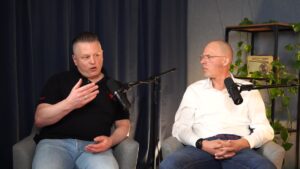
That conversation now has a visible home in the Digital Health & Innovation Cluster, the Sofia-based platform connecting Bulgarian digital-health companies to European healthcare institutions and regulators. On 22 April 2026, DHI Cluster Marketing and Communications Specialist Iliyana Grudeva published an eight-question interview with Vereign CEO Georg Greve, examining how a Swiss-Bulgarian company is building the authenticity layer beneath European healthcare communication.
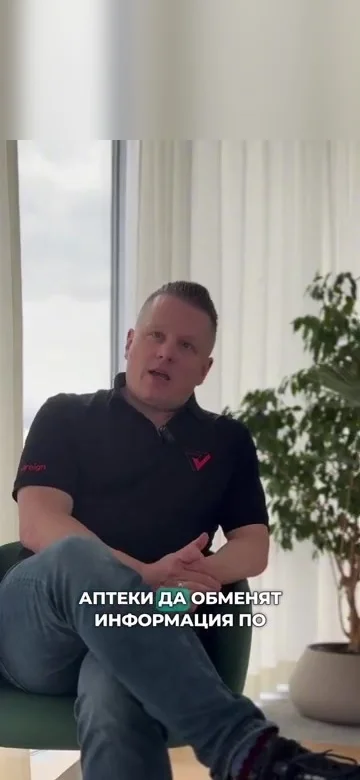
We are republishing the full English interview here for readers who follow European health-infrastructure policy. The Bulgarian original, and a short video highlight reel produced by DHI Cluster, remain the definitive editions.
Published by DHI Cluster, Sofia — 22 April 2026.
Interview by Iliyana Grudeva, Marketing and Communications Specialist, DHI Cluster.
Read the English original or the Bulgarian version on dhicluster.com.
“Bulgaria punches far above its weight in innovation, technical capability, and talent — and the DHI Cluster is the nerve center of it.”
— Georg Greve, CEO, Vereign
The full interview
What inspired Vereign and how would you describe your company?
Georg Greve: Vereign is a Swiss-Bulgarian digital authenticity company headquartered in Zug, with engineering in Sofia. What we do, in one line, is decentralise trust in healthcare communication rather than delegating verification to a handful of third parties. The inspiration came from watching, over twenty-five years, how large platforms and certificate authorities quietly centralised trust into their own commercial interest. Let’s Encrypt alone holds roughly 60 percent of all TLS certificates on the public web. When a single intermediary can be compelled, compromised, or simply go dark, the entire layer beneath it becomes brittle. Vereign builds the opposite: endpoint-based cryptographic identity, with authenticity at the edge instead of in a single certificate authority. That is the architectural choice everything else follows from.
What problems does Vereign solve and who are the main users?
Georg Greve: Two product lines, two audiences. SEAL handles communication between healthcare professionals and patients — the moment a lab report, referral, or consultation note leaves a clinic and needs to reach someone who may not have any specialised software installed. Stargate handles institutional trust, the connective tissue between hospitals, clinics, insurers, and authorities that need to authenticate each other at machine speed without asking a central authority for permission each time. Our primary user base today sits inside the HIN network — Health Info Net, Switzerland’s trust network for healthcare professionals. More than 800,000 secure healthcare interactions pass through Vereign infrastructure every month. Doctors sending reports, lab results, referrals — the daily substrate of clinical care.
What are your main products and what makes them innovative?
Georg Greve: SEAL is deliberately installation-free. Recipients do not need pre-exchanged certificates, plugins, or accounts. The sender’s message is encrypted with AES-GCM-256, fragmented into small pieces, and distributed across a decentralised swarm. Only the intended recipient can reassemble and decrypt. From the user’s perspective it feels like opening a normal web page; structurally, there is no central store where the full message ever exists. Stargate replaces thirty-year-old trust infrastructure with decentralised identity, allowing organisations to authenticate one another without a central authority brokering every exchange. The innovation is not in any single cryptographic primitive — it is in the architectural decision to put authenticity at the endpoints and let the network carry encrypted fragments, not plaintext secrets.
Which markets are you currently operating in?
Georg Greve: Switzerland is our operational market today. Bulgaria is our engineering hub. Those two points are not incidental to what we build — they are the geometry of how we build it. Swiss healthcare gives us the regulatory and clinical discipline of one of the most demanding health systems in Europe. Sofia gives us the technical depth to deliver. From here, our expansion sits in the EU, aligned with the European Health Data Space regulation. EHDS changes the question every national health system is asking, from “should we connect?” to “how do we connect in a way that respects patient rights, clinical confidentiality, and institutional sovereignty simultaneously?” That is exactly the question our architecture answers.
What are the biggest challenges in healthcare today that Vereign helps solve?
Georg Greve: Three structural problems that keep reappearing across every European health system. First, data trapped in institutional silos — each clinic, hospital, and insurer running systems that do not speak to each other, forcing clinicians back onto fax, paper, and phone calls for anything that crosses organisational boundaries. Second, email infrastructure that was never designed to carry sensitive health data, and still does, by default, in most of Europe. Third, the persistent trade-off between security and accessibility: the more secure a system is made with conventional tools, the harder it becomes to actually use, which drives clinical staff back to insecure workarounds. SEAL addresses the communication layer; Stargate addresses the institutional trust layer. Together they dissolve the trade-off rather than managing it.
Why did Vereign join the DHI Cluster?
Georg Greve: Because the DHI Cluster is the natural bridge between Sofia’s technical capability and European health-sector demand. Bulgaria punches far above its weight in innovation, technical capability, and talent — and the DHI Cluster is the nerve center of it. What we needed was not simply visibility; it was a platform where Bulgarian engineering could meet European healthcare institutions and policymakers in the same room. The Cluster makes that conversation routine. For a company like ours, which builds infrastructure intended for cross-border use, being embedded in a community where that cross-border logic is already understood matters enormously. It also signals something to the wider market: that the digital-health conversation in Europe has a Bulgarian address, not only a Berlin, Paris, or Zurich one.
What are your goals for the next 1-3 years?
Georg Greve: The central Stargate platform launches in 2026. From there, phased rollout across Swiss GP offices follows, integrating with the daily workflow of practices already using HIN services. FHIR-based structured data exchange enters production during the same window — moving us from “secure messages between people” to “secure structured data between systems,” which is the prerequisite for real interoperability. European expansion is the 2026–2027 horizon, driven by the EHDS compliance calendar and the realisation across national health systems that the regulation will not wait. Our goal through that window is straightforward: prove at European scale what we have already proved in Switzerland, and do it with infrastructure that does not ask anyone to cede sovereignty in order to participate.
What is your vision for healthcare in 10 years?
Georg Greve: Clinical data flowing securely across organisational boundaries, with cryptographic authentication built in at the protocol layer rather than bolted on afterwards. Trust infrastructure becoming a neutral shared layer, the way DNS or TLS became neutral shared layers for the web, so that no bilateral agreement is needed for every single exchange between two institutions. Privacy-preserving, authenticated, interoperable — those three words have to hold simultaneously, not in rotation. The healthcare systems that get this right will spend the next decade freeing clinical time from administrative friction. The ones that do not will keep reproducing silos at higher fidelity. Our job is to make sure the infrastructure choice is available to everyone who wants to get it right.
Discover how Vereign processes 800,000+ verified healthcare communications per month in Switzerland. Read the HIN use case →