
Verified Browser Mail
Every message verified. Every sender authenticated.
SEAL processes 800,000+ verified messages per month across Swiss healthcare — cryptographically signed, fully auditable, no software installation required.
See how SEAL works — 5-minute overviewHealthcare professionals need to send verified, confidential information to patients — on any device, with no software to install. SEAL (Secure Edge Application Layer) makes this possible: every message cryptographically signed, every sender verified, full audit trail preserved. No assumptions about recipient infrastructure. Already processing 800,000+ verified messages monthly across Swiss healthcare.

30,000+
GP offices and healthcare institutions
What SEAL delivers
Every sender is verified before a message is accepted
SEAL (Secure Edge Application Layer) authenticates each sender's cryptographic identity at the point of origin. Messages from unverified sources are rejected before delivery.
Every message is cryptographically signed and auditable
Each message carries a verifiable cryptographic signature. Recipients — and auditors — can confirm who sent a message, when it was sent, and that it has not been altered in transit.
Documents are adapted to the recipient's context
Using Overlays Capture Architecture (OCA), documents are automatically rendered in the format and language appropriate for the recipient organisation — without modifying the underlying signed payload.
Deployable standalone or as part of Verimesh infrastructure
SEAL is designed to operate independently within existing messaging infrastructure — wherever verifiable communication is needed. Organisations ready to join the full authenticated exchange ecosystem can upgrade to Verimesh.
How it works
When a sender dispatches a message, SEAL authenticates their cryptographic identity using Decentralised Key Management System (DKMS) anchoring and attaches an Authentic Chained Data Container (ACDC) credential as a verifiable envelope. The message traverses the transport layer — which can be standard email infrastructure — and arrives at the recipient, where SEAL verifies the sender's identity and the integrity of the payload before delivery. Verifiable Credentials (VCs) and ACDC attestations make both ends of the exchange independently auditable.
For technical readers, the diagrams below show the full message flow and data structure. Expand either section to view.
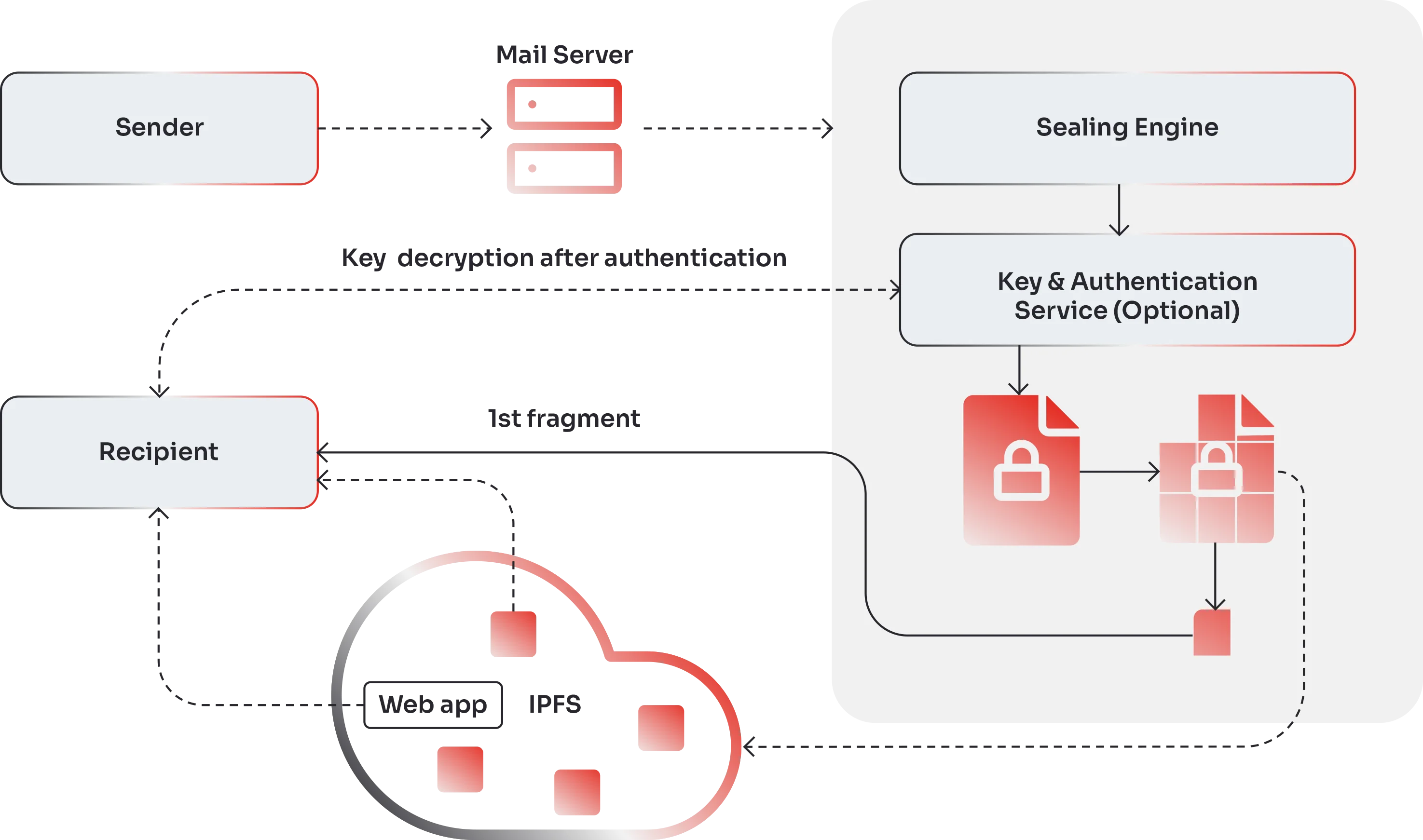
SEAL message flow
SEAL authentication operates in three phases: sender identity verification before dispatch, cryptographic signing and envelope construction during transmission, and signature verification with credential validation on arrival. The Web Verification App provides a browser-native verification experience for recipients — no software installation required.
Email data structure
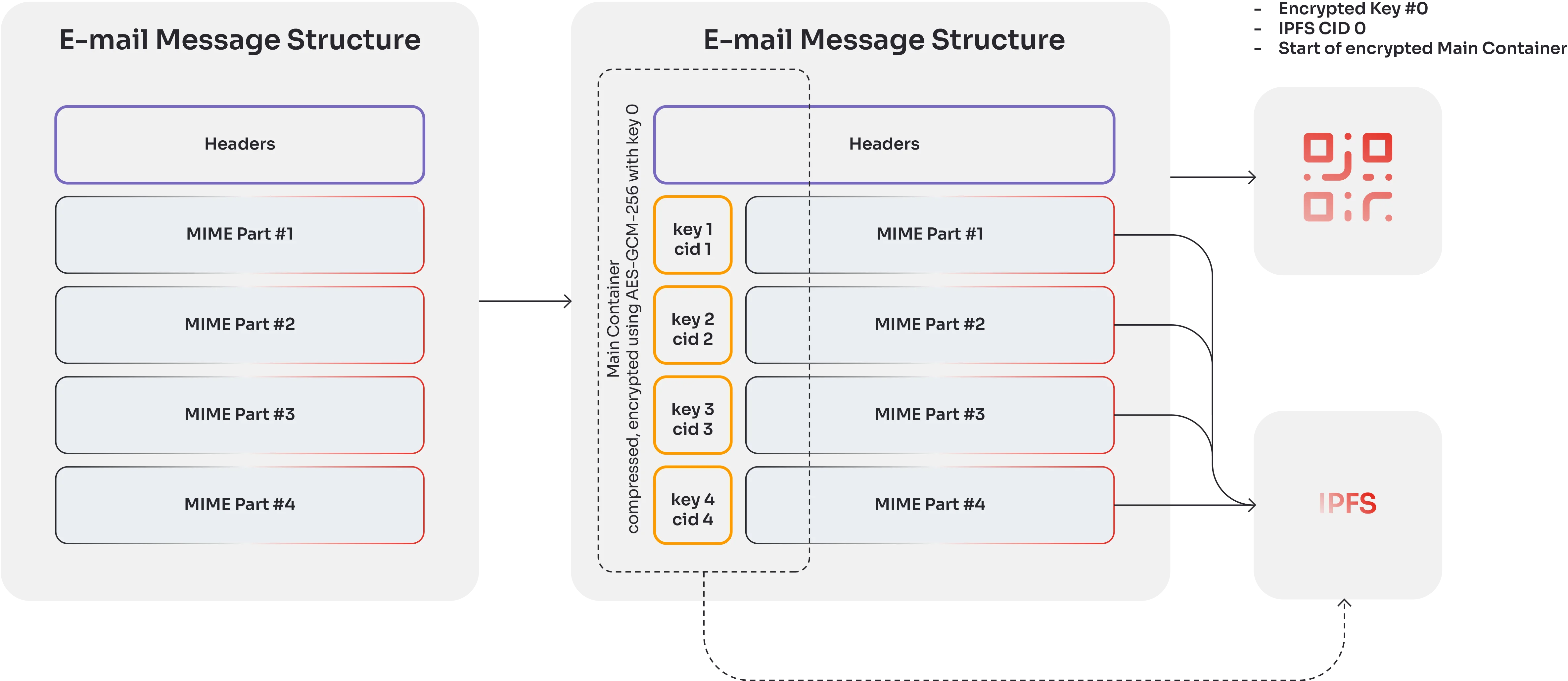
The SEAL verifiable envelope nests the signed payload within a structured container that carries the sender credential (ACDC), metadata overlays (OCA), and the cryptographic signature. Any compliant verifier can independently confirm authenticity without relying on a central authority.
What recipients see
When someone receives a SEAL message, they can verify its authenticity directly in their browser — no software to install, no certificates to manage.
Message verified
Cryptographic signature valid — sender identity confirmed
- From
- Dr. Maria Huber
- Organisation
- Kantonsspital Zürich
- Sent
- 13 March 2026 — 09:14
- Subject
- Patient referral — confirmed
- Identity credential — HIN member in good standing
- No modifications detected since signing
SEAL and Verimesh
SEAL is the entry product. It solves the communication problem: every message signed, every sender verified, every exchange auditable — with zero installation for recipients. Verimesh is the infrastructure destination: identity management, certificates, credentials, policy engine, sovereign data exchange, transport, and semantic interoperability. Start with SEAL. When your organisation is ready to join — or lead — the authenticated exchange ecosystem, upgrade to Verimesh.
SEAL can be deployed independently wherever verifiable communication is needed — it does not require the full Verimesh infrastructure.
Explore VerimeshSEAL is the message-layer foundation. Verimesh is the authorization layer that enforces consent withdrawal across institutions. Together with SEAL, they form the consent enforcement substrate.
Read the consent architecture thesisFully open source
Every line auditable — AGPLv3+
SEAL — frequently asked questions
What is SEAL?
How does SEAL differ from S/MIME or PGP?
Is SEAL open source?
Do recipients need to install anything to verify a SEAL message?
Who runs SEAL in production today?
Can SEAL be deployed without Verimesh?






Ready to add verified messaging to your infrastructure?
Whether you are evaluating secure communication for your organisation or exploring how verified messaging fits your sector, let us talk.